………….. hoverfly
Large white
The developing butterfly area is attracting……… butterflies!
Meanwhile a new colour has appeared in the mere

this looks more like a fuzzy satellite image.
Was actually taken 1.5m above water level!
………….. hoverfly
Large white
The developing butterfly area is attracting……… butterflies!
Meanwhile a new colour has appeared in the mere

this looks more like a fuzzy satellite image.
Was actually taken 1.5m above water level!
01.07.08
spotted at the Pyghtle feeders, a new visitor,
a young nuthatch, seen the previous day as well.
-have yet to catch sight of the adult birds at the Mere,
so keep looking!
in an attempt to confuse me,
trying to look and act like a nuthatch,
a great tit . . isn’t birding wonderful?
Yesterday rare migrants, common vagrants, residents and fairly scarce summer visitors were spotted at the site. Unfortunately we also had some sightings of vermin. Olivia is going to dispose of an unpleasant looking purplefooted mouse
Ann tried to splat a common rat (rattus horribilis) whilst Steve supervised when to hit it.
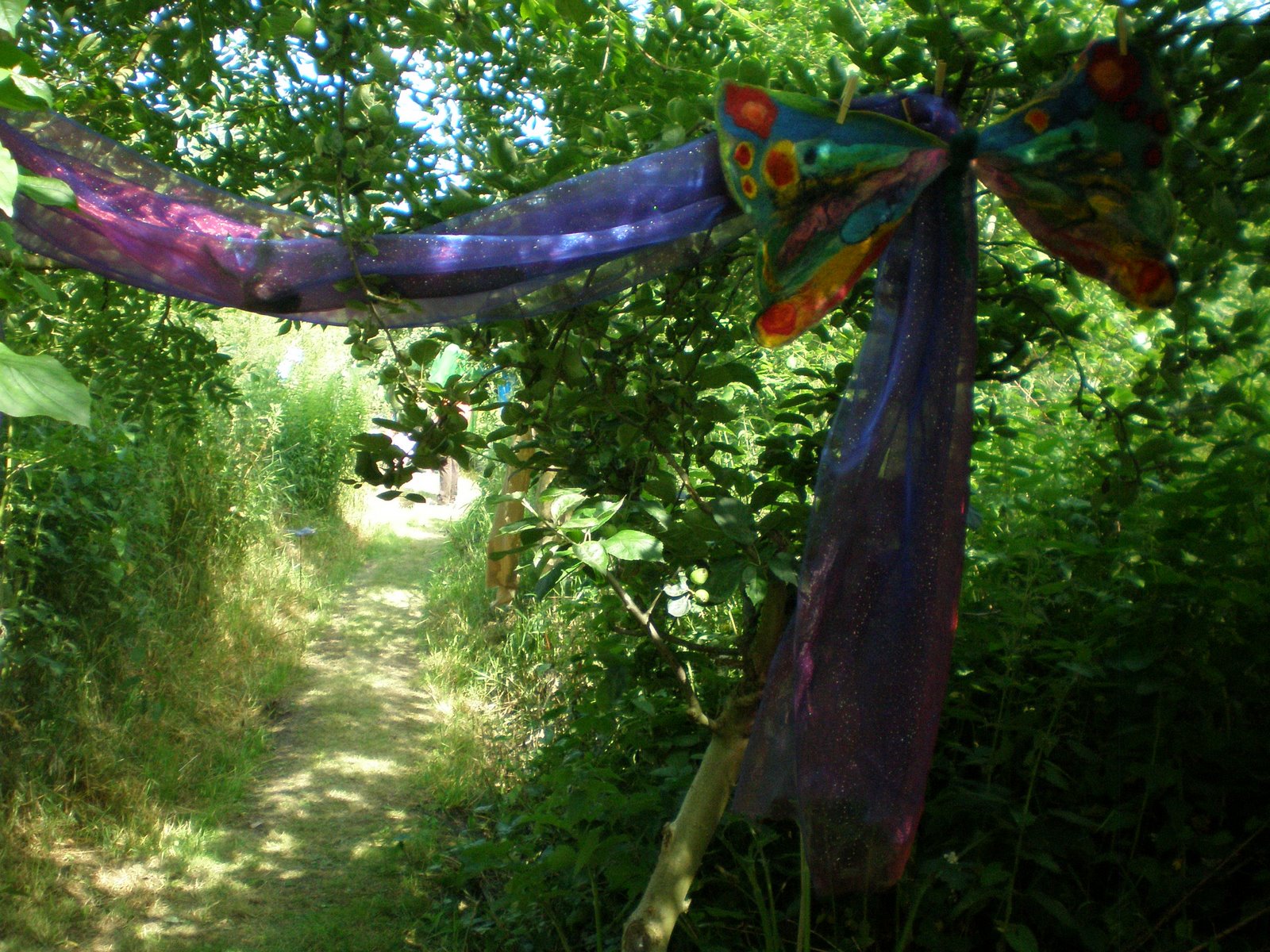
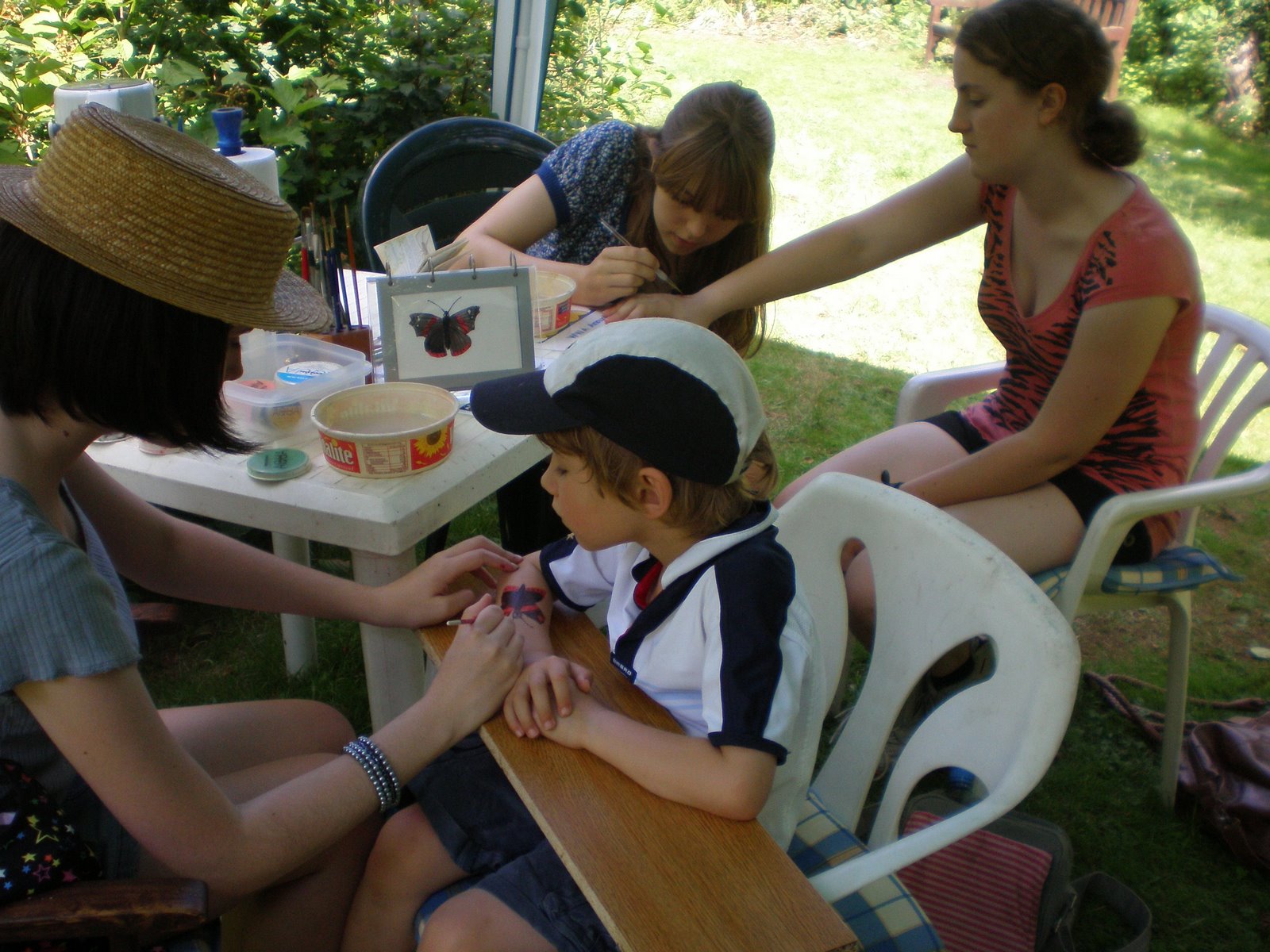
A new colourful species of butterfly was sighted. It got attached to this little boy
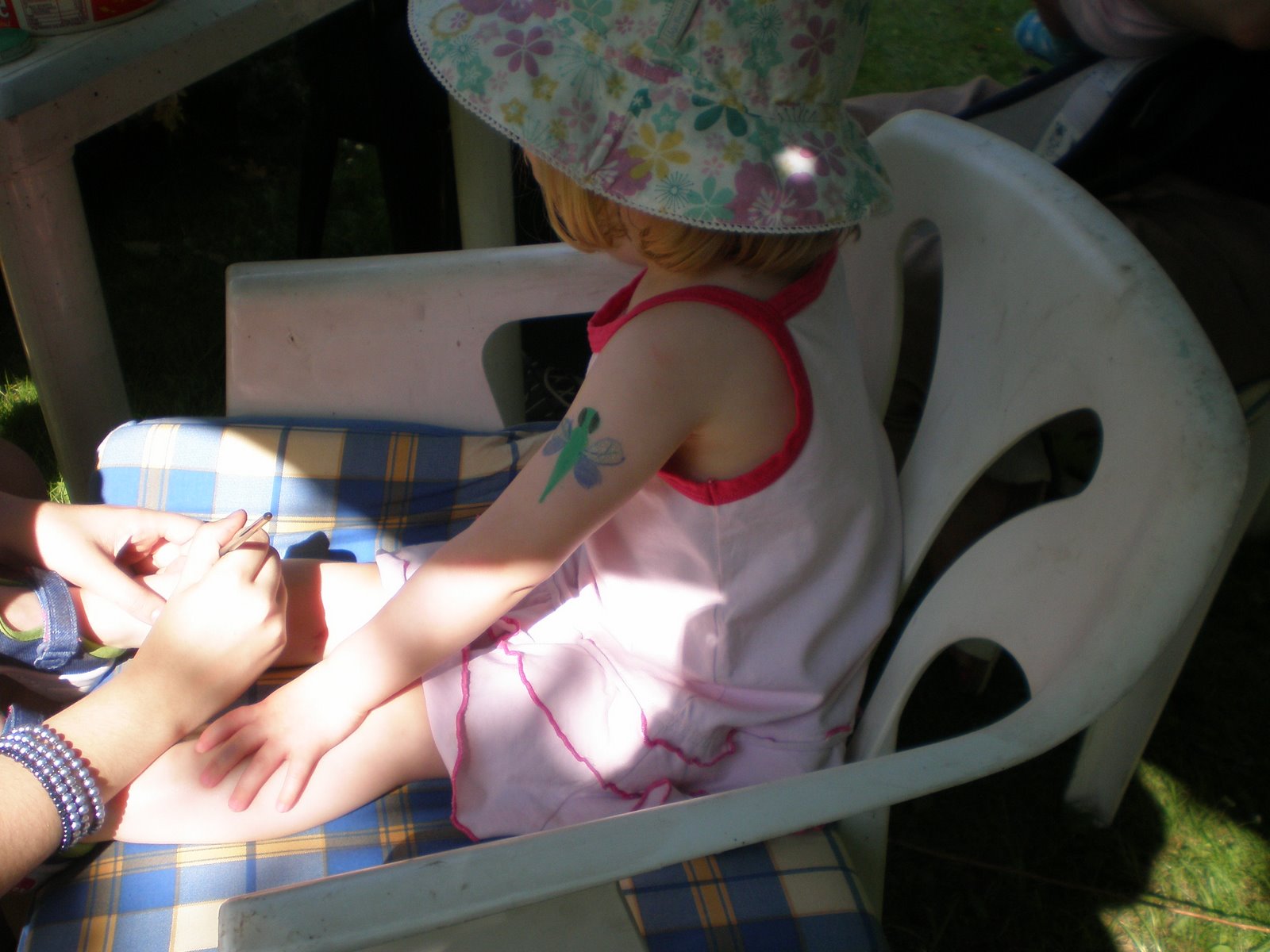
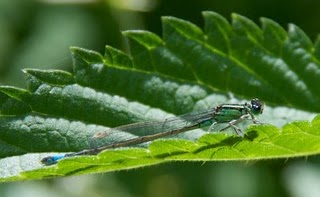
A dragonfly was spotted which is endemic to the site
This young visitor thought she’d take a duck home
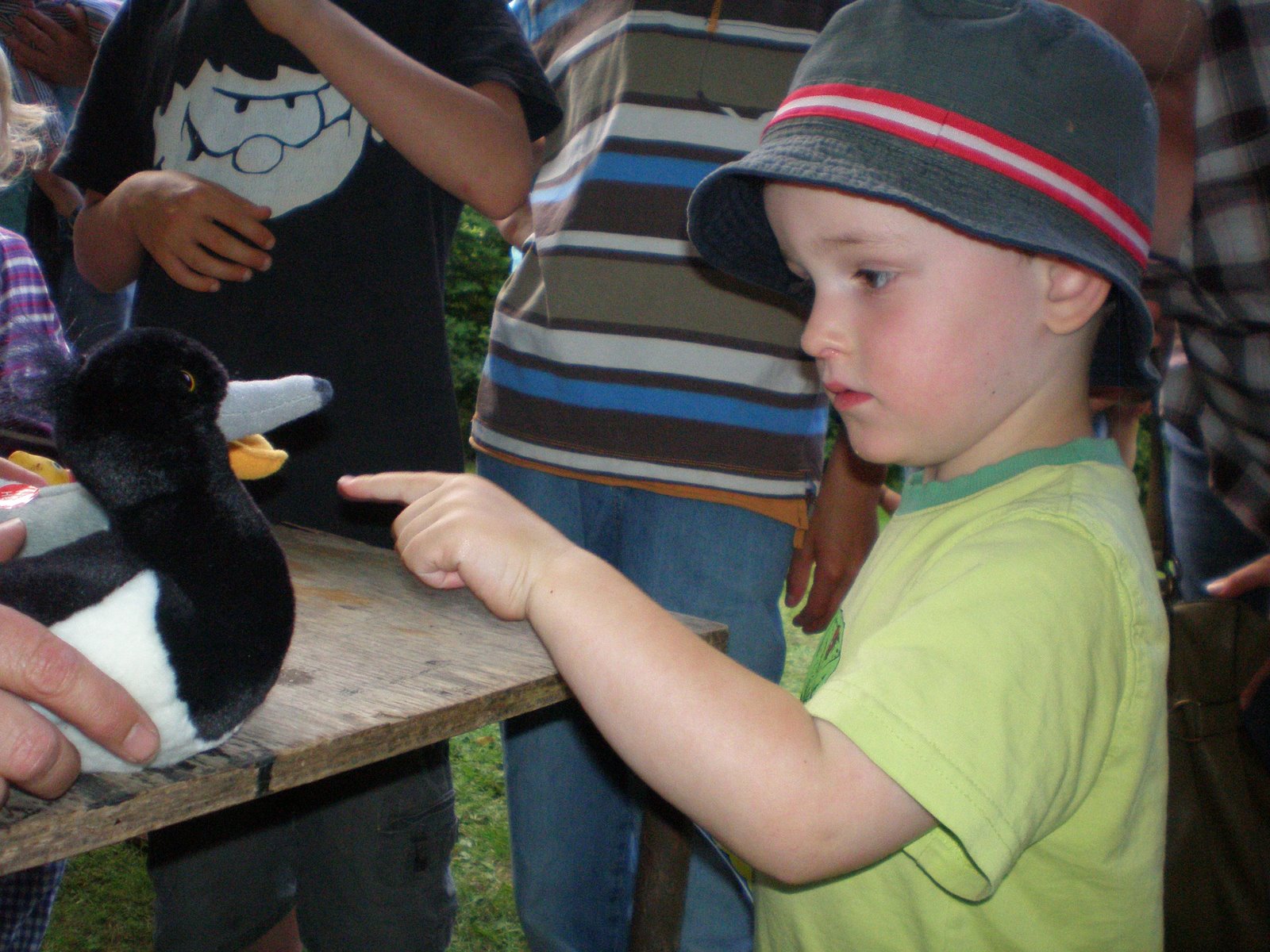
This little boy thought the duck was a fake
Jack caught this new species of duck (anas plasticus)
(and a very pleasant summer party was enjoyed by all)

Here’s an arty shot of a bumble bee on a flower in the butterfly garden.

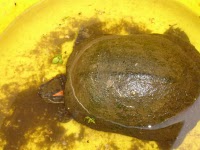
A damselfly in the alligator’s mouth.

OK, so this isn’t an insect. It’s the heron that’s been a near permanent resident on the mere, taking off from the fallen tree.

A fly, on the bridge railing. Common, yes, but interesting in close-up all the same.
20.05.08
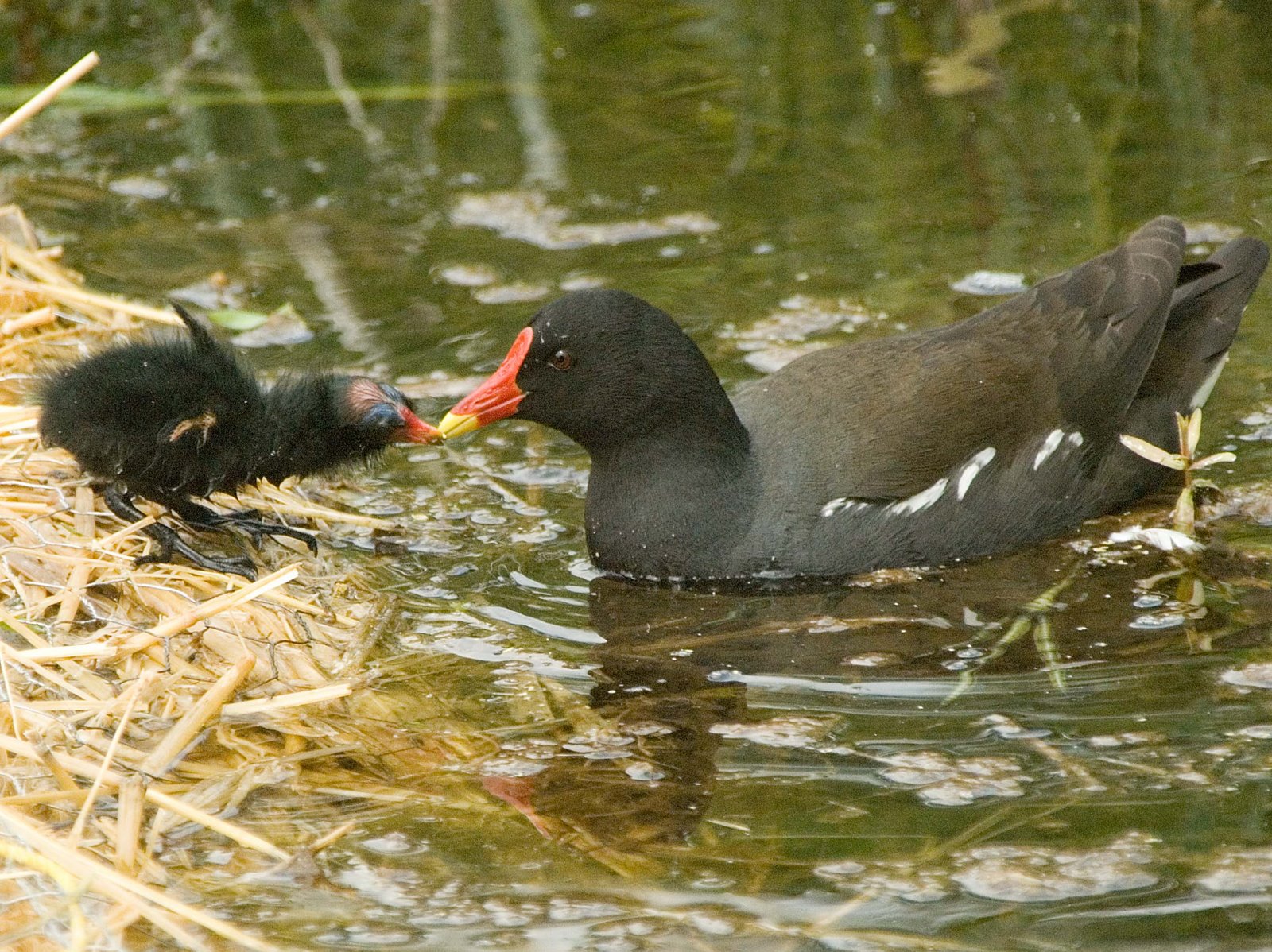
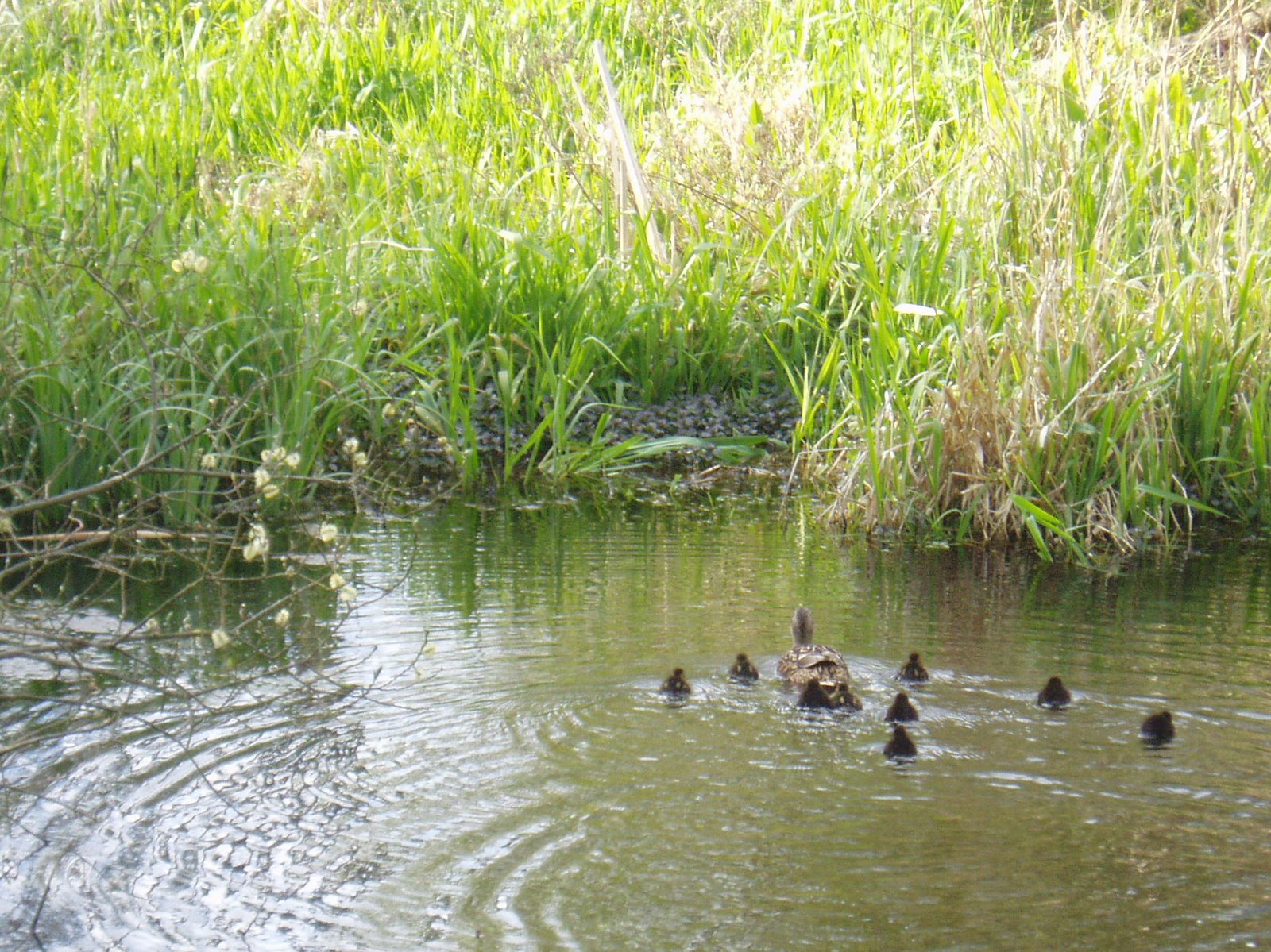
a clutch of moorhen chicks are being raised near the aquifer,
east of the main bridge across The Mere.
Safety seems assured by the nearby straw rolls
and the netting that holds them together.
However, the herons are after them.
I counted four chicks and witnessed two heron attacks.
All survived, but for how long I wonder?
11.05.08
a female blackbird “anting”.
This behaviour is part of many a bird species cleaning regime.
An ants nest is upset, the ants attack the perpetrator
with formic acid, this kills mites etc.
A dust bath or wash then finishes the job.
14.05.08
a young heron, something of a regular in the last few weeks.
There is something primeval and fascinating about these birds . . .
A heron goes in for the kill! There’s been one on duty on the mere for a few days.
I imagine it’s all the fish that attract the heron. The mere is teeming with them. Just stand on the bridge for a few seconds and you’ll see plenty. They’re hard to photograph though!
The butterfly meadow is coming along brilliantly with a variety of butterflies seen across the site. Here’s a Speckled Wood.
RESERVE MANAGER’S REPORT March – April 2008
Already, this year, there have been butterflies seen on the perennial Wallflower (Bowles Mauve) in the Butterfly Meadow. The bees seem to love it too.
Lots of small fish have just appeared in the Mere last week – especially noticeable near the main bridge.
The new bird feeding station has proved to be a success. There have been sightings of a female Brambling, Siskins, and two Reed buntings (a first for the Reserve) feeding at the station.
The Water rail is still around. Also there is a pair of Kingfishers about at the moment which hopefully will breed on the Reserve.
Notable flora in bloom include Primrose, Green Alkanet, Ramsons, Violets, Marsh Marigold, Cowslips, Fritillary, Perennial Wallflower and the first Bluebells. The native Daffodils and Snowdrops have finished and Cow Parsley is taking over instead.
Howard